
Treatment Categories

Bisphosphonates

<p><strong>Bisphosphonates</strong> are a class of medications primarily used to prevent and treat osteoporosis, a condition where bones become weak and fragile due to loss of bone density. These medications work by slowing down the natural process of bone breakdown, helping to maintain bone strength and reduce the risk of fractures.</p><p>Bisphosphonates are commonly prescribed for postmenopausal women and older adults who are at increased risk of osteoporotic fractures, particularly of the hip, spine and wrist. They may also be used to treat other conditions that affect bone health, such as Paget's disease.</p><h3>How they work</h3><p>These medications inhibit the activity of osteoclasts, the cells responsible for breaking down bone tissue. By reducing bone resorption, bisphosphonates help to preserve existing bone mass and allow the body to rebuild stronger bones over time. Treatment is typically long-term and requires regular monitoring by a healthcare professional.</p><h3>Online consultation</h3><p>You can access bisphosphonate treatments through an online consultation with an EU-registered doctor. After completing a detailed medical questionnaire, a qualified physician will assess your bone health, medical history and suitability for treatment. If approved, your prescription is sent to a certified pharmacy for discreet delivery to your door.</p>

1 available treatments

Understanding Bone Health and Bisphosphonates — Your GP's Guide

<p>Many of my patients come to me concerned about their bone density scan results, often feeling frightened by the word <em>osteoporosis</em>. It is completely natural to feel anxious when you are told your bones are thinning, but I always want to reassure you that this is a highly manageable condition, and you do not have to live in constant fear of fractures.</p><p>Bisphosphonates are the cornerstone of how we protect your skeleton. Unlike what many people think, our bones are not static pillars; they are living tissues constantly being broken down and rebuilt. Bisphosphonates work by slowing down the cells that break down bone, allowing your bone-building cells to catch up. A clinical insight I often share in my practice is that treating bone thinning is not just about making bones denser on a scan—it is about improving the micro-architecture of the bone, making it fundamentally less brittle, much like reinforcing the internal scaffolding of an old building.</p><p>With the right approach, including highly effective treatments like Actonel, we can significantly reduce your risk of fractures. My goal is to help you maintain your active, independent lifestyle without the constant worry of fragile bones.</p>

Comprehensive Guide to Bisphosphonate Therapy

Available treatment options

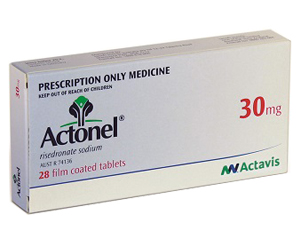
When it comes to bisphosphonates, we have several oral options. Alendronic acid is usually the first-line choice on the NHS due to cost-effectiveness. However, I frequently prescribe Actonel (which contains the active ingredient risedronate sodium ) through independent platforms for patients who need an alternative.

Actonel comes in daily, weekly, or monthly doses. From my clinical experience, while alendronic acid works wonderfully for many, I often recommend Actonel for patients who struggle with the strict fasting and upright-posture rules of standard bisphosphonates, as risedronate can sometimes be better tolerated in the stomach and offers flexible dosing schedules that better fit a busy lifestyle.

What to expect from treatment

Starting a bisphosphonate requires a strict routine—taking it on an empty stomach with a full glass of water and staying upright for at least 30 minutes. Patients often ask me how they will know if the medication is working, since they cannot 'feel' their bones getting stronger.

I always tell them that in osteoporosis treatment, 'no news is good news.' The absence of new fractures is our primary goal. We typically will not repeat a bone density scan for at least two to three years, as bone turnover is a remarkably slow process.

Do not be discouraged if your next scan only shows 'stable' bone density rather than a massive increase; stopping the decline is a huge medical victory.

Self-care and prevention

Medication is only half the battle. Your bones need raw materials to rebuild, which means adequate dietary calcium and Vitamin D. But beyond diet, exercise is paramount. A common misconception I correct in my clinic is the type of exercise needed.

Swimming and cycling are fantastic for your heart, but they do almost nothing for your bone density because the water or the bicycle supports your body weight. To build bone, you need gravity and impact.

I advise my patients to engage in brisk walking, dancing, or light weightlifting—activities where your bones have to physically resist the pull of the earth. This mechanical stress is what signals your body to send calcium to the bones.
Frequently Asked Questions

Medically reviewedDr. Claire Phipps(GMC: 7014359)

Protecting Your Bones: A Doctor's Guide to Bisphosphonates

Important: Prescriptsy connects you with independent, EU-registered doctors. We do not sell medication directly. All treatments are prescribed by a doctor and delivered discreetly to your door.