Constipation Treatment Guide
Available treatment options
When dietary and lifestyle changes aren't quite enough, we turn to medical treatments. There are several types of laxatives available, including bulk-forming, osmotic, and stimulant varieties. I usually recommend starting with an oral osmotic laxative to draw water into the bowel.
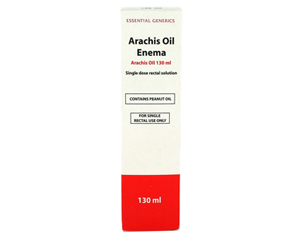
However, for stubborn cases where the stool has become hard and impacted lower down in the rectum, I often recommend an Arachis Oil Enema . This works locally by lubricating and softening the impacted stool, making it significantly easier to pass without excessive, painful straining.
Because it acts directly at the site of the blockage, it bypasses the digestive system. Please be aware that arachis oil contains peanut extract, so it is strictly contraindicated if you have a peanut or soya allergy.
What to expect from treatment
Setting realistic expectations is vital. Oral laxatives can take anywhere from 24 to 72 hours to work, which can be frustrating when you are uncomfortable. Enemas, on the other hand, offer much faster relief.
If you are using an Arachis Oil Enema, you can typically expect results within 30 minutes to a few hours. A common experience my patients report is a feeling of fullness or mild cramping immediately after administration, which is a normal sign that the bowel is preparing to empty.
Here is a clinical pearl I always share: the key to a successful oil enema is retention. I advise my patients to administer it while lying on their left side with their knees drawn up toward their chest.
Try to hold the liquid in for at least 20 minutes before going to the toilet. This allows the oil sufficient time to fully penetrate, coat, and soften the hardened stool.
Self-care and prevention
Managing constipation long-term is all about establishing a solid, reliable bowel routine. Your bowels are highly trainable. I advise my patients to take advantage of the gastrocolic reflex —this is the body's natural, physiological urge to clear the bowel shortly after eating a meal, particularly breakfast.
Try to sit on the toilet for 5 to 10 minutes after your morning meal. When you sit, use a small step or footstool to elevate your knees above your hips.
This mimics a natural squatting position, which straightens out the anorectal angle and makes passing stool much easier without straining. Finally, hydration is just as critical as fibre.
Eating a high-fibre diet without drinking adequate water will actually make your constipation worse, essentially creating a dry blockage in your gut.