Dry Eye Treatment Guide
Available treatment options
The foundation of treating dry eyes is artificial tears, but not all drops are created equal. For mild, occasional dryness, standard hydrating drops might suffice. However, for moderate to severe cases, or for patients who wake up with painfully dry eyes, I often recommend a thicker, more viscous drop.
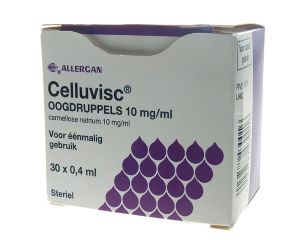
Celluvisc is an excellent example of this. It contains carmellose sodium , which acts as a highly effective synthetic tear. Because it is thicker than standard drops, it stays on the surface of the eye much longer, providing a protective cushion.
I typically advise patients to use a drop like Celluvisc particularly before bedtime, as our natural tear production significantly drops while we sleep, leading to that 'sandpaper' feeling first thing in the morning.
What to expect from treatment
When you start using a high-viscosity artificial tear, it is crucial to set realistic expectations. A common panic I see in my clinic is patients returning after one day, saying the drops made their vision blurry.
I want to reassure you: a brief period of blurred vision (usually 1 to 2 minutes) immediately after instilling a drop like Celluvisc is entirely normal and actually a good sign.
It means the drop is thick enough to do its job of coating the cornea. You won't cure dry eyes overnight. It typically takes a week or two of consistent use to calm the microscopic inflammation on the surface of your eye.
Stick with it, applying the drops 2 to 4 times a day, and you will gradually notice your eyes feeling cooler, more rested, and less gritty.
Self-care and prevention
Medication is only half the battle; modifying your environment is just as critical. I always advise the '20-20-20 rule' for screen users: every 20 minutes, look at something 20 feet away for 20 seconds to force a full, complete blink.
Furthermore, position your computer monitor below eye level; looking slightly downward means your eyelids cover more of your eye surface, drastically reducing tear evaporation. Finally, consider your indoor environment.
Central heating and car air conditioning are notorious tear-thieves. Point car vents away from your face and consider using a small desktop humidifier during the winter months to keep the ambient air moist.